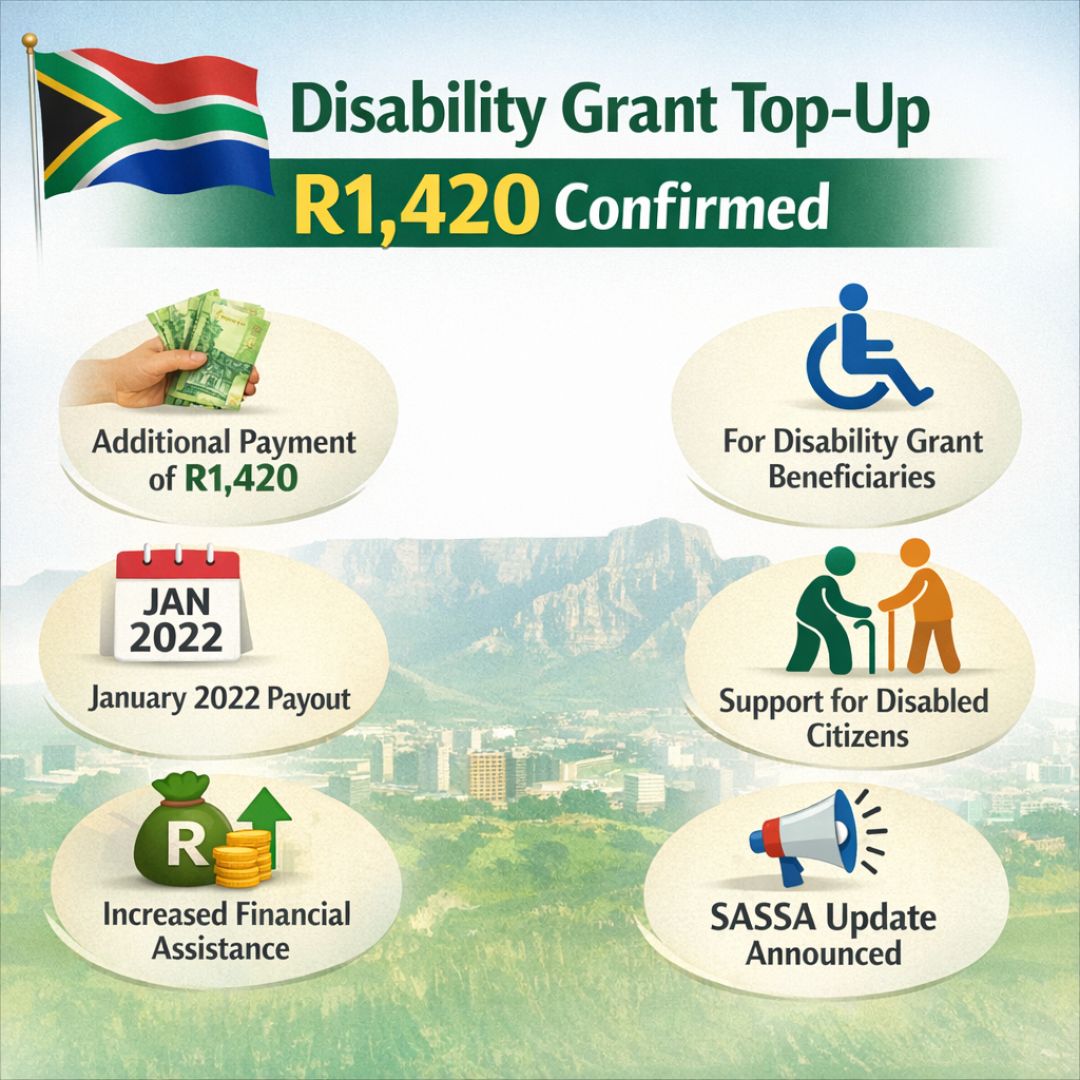
SASSA’s January 30 Disability Grant Increase The South African Social Security Agency (SASSA) has announced an important increase in disability grants to help the disabled community. Starting from January 30 2026, disabled citizens will receive an additional R1,420 added to their monthly grants. This decision shows the government’s dedication to improving the lives of people with disabilities by giving them better financial stability and support. The increase brings much-needed relief to many South Africans who depend on these grants as their main source of income. As the cost of living continues to rise, this additional amount is expected to ease some of the financial burden that disabled citizens face throughout the country.

Overview of the SASSA Disability Grant Increase
The South African government, through SASSA, continues to review and adjust social support to meet the needs of vulnerable communities. The increase of the disability grant to R1,420 per month forms part of a broader plan to strengthen economic assistance for people living with disabilities. This financial support is intended to help cover essential living costs such as food, healthcare, and basic services. By adjusting the grant amount, the government aims to promote social fairness and reduce poverty among eligible beneficiaries.
– Monthly grant amount: R1,420

– Effective date: January 30 2026
– Primary purpose: Support basic living needs
– Eligible group: South Africans with disabilities
– Application channels: SASSA offices or online portal
Who Qualifies for the SASSA Disability Grant
To receive the R1,420 disability grant, applicants must meet specific eligibility conditions set by SASSA. These requirements are designed to ensure that assistance reaches those who genuinely need support. Applicants must be South African citizens, permanent residents, or recognized refugees residing in South Africa. In addition, they must fall within the 18 to 59 age range and have a medically confirmed disability verified through an official assessment.
| Eligibility Requirement | Updated Criteria | Important Notes |
|---|---|---|
| Age Limit | 18 to 59 years | Age must meet criteria at application time |
| Residency Status | South African citizen or legal resident | Permanent residents and recognized refugees included |
| Medical Eligibility | Verified long-term disability | Official medical assessment is mandatory |
| Income Assessment | Means-tested qualification | Household income review will be conducted |
Steps to Apply for the Disability Grant Increase
The process of applying for the disability grant top-up has been simplified to improve accessibility. Eligible individuals can submit applications at SASSA service offices or through the official online platform. Applicants are required to provide a valid identity document, proof of residence, and a medical assessment report. Once documents are submitted, SASSA reviews the application before issuing confirmation.
– Visit a local SASSA office or use the online portal
– Submit all required documentation
– Complete a medical evaluation
– Wait for application approval confirmation
How the Grant Increase Affects Disabled Beneficiaries
The revised disability grant amount is expected to bring meaningful relief to many recipients. The increase provides financial stability and helps beneficiaries better manage daily necessities. For many disabled citizens, the additional support improves access to food, healthcare, and other essential items. Recipients have acknowledged that the adjustment makes it easier to cope with rising living costs and maintain basic household needs.
| Impact Area | Details | Potential Benefits |
|---|---|---|
| Food Security | Increased purchasing power | Better nutrition and health |
| Healthcare Access | Improved ability to afford medication | Better health outcomes |
| Economic Stability | Reduced financial stress | Improved quality of life |
Ongoing Challenges for Disabled People in South Africa
Although the grant increase offers valuable support, many disabled individuals in South Africa continue to face significant obstacles. Issues such as limited healthcare access, employment barriers, and transportation difficulties remain widespread. Cultural stigma and discrimination also affect social inclusion. The government and partner organizations are actively working to address these challenges through inclusive development efforts.
– Lack of accessible transport systems
– Restricted employment opportunities
– Healthcare access limitations

– Persistent stigma and discrimination
The Contribution of NGOs to Disability Support
Non-governmental organizations play an essential role in strengthening support for disabled citizens. These organizations complement government initiatives by offering advocacy services, skills development, and community integration programs. NGOs are instrumental in promoting disability rights awareness and providing direct assistance that improves quality of life for beneficiaries.
– Advocacy for disability inclusion
– Skills training and empowerment initiatives
– Support services and counseling programs
– Community education campaigns
– Employment partnerships with local businesses
Looking Ahead: Disability Support Developments
The outlook for disability support in South Africa remains positive as the government and NGOs continue to collaborate. Ongoing efforts focus on policy improvements, expanded funding, and stronger partnerships to enhance inclusion. The recent grant increase reflects a commitment to building a society where people with disabilities can access equal opportunities and improved living conditions through sustained support.
– Enhanced policies for disability inclusion
– Increased public funding
-Stronger collaboration with NGOs
– Improved accessibility standards
– Continued public awareness programs
– Advances in accessibility technology