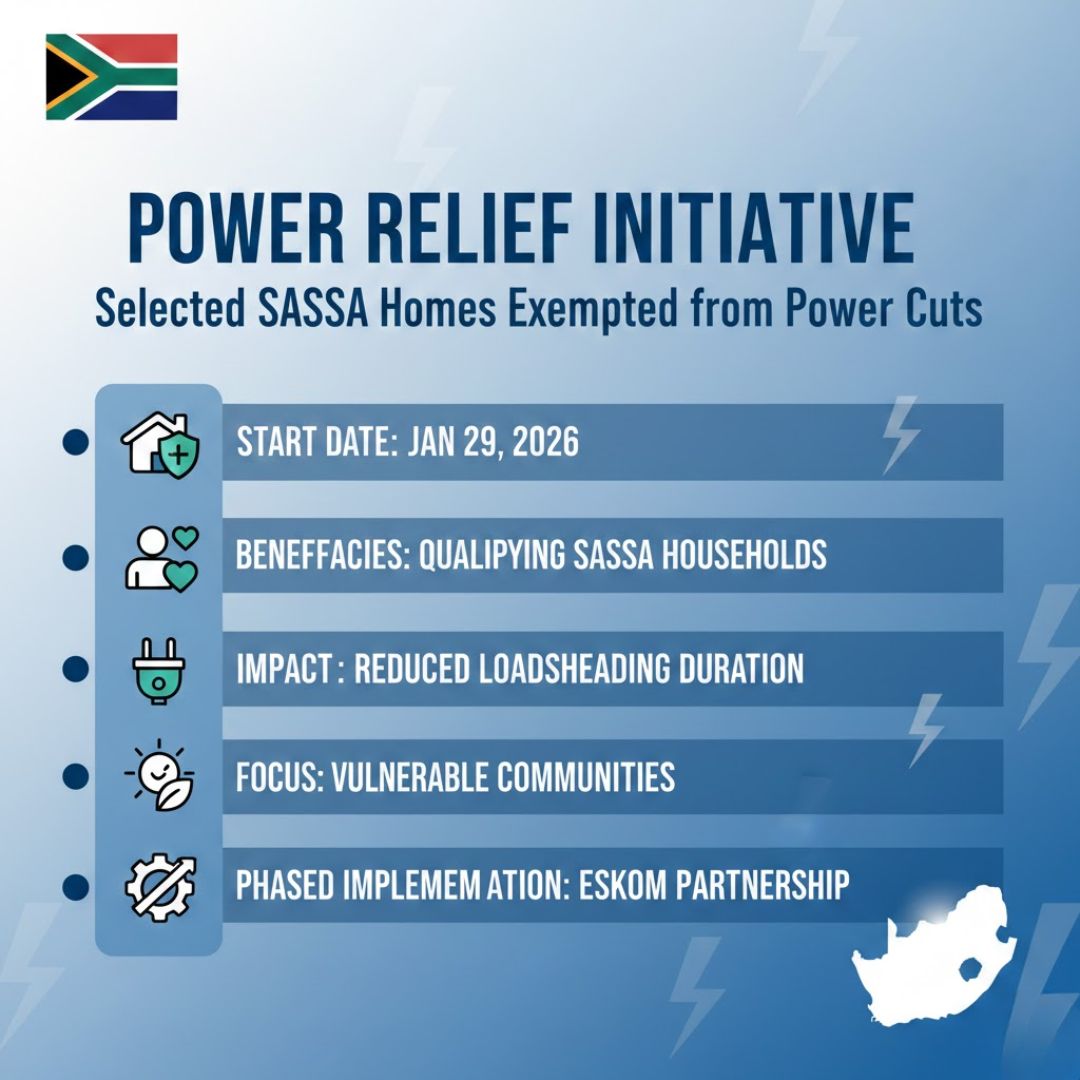
Power Crisis Relief in South Africa: Loadshedding End for SASSA Families Starting 29 January The South African government has announced an important exemption from loadshedding for families who receive grants from the South African Social Security Agency (SASSA). This exemption will begin on 29 January and targets vulnerable groups across the country. The initiative aims to reduce the impact of the power crisis on those who need help the most. Loadshedding has caused major disruptions to daily life and economic activities for many households nationwide. This exemption brings much-needed relief to families who have struggled with regular power cuts. The government has decided to prioritize social grant recipients to ensure they have continuous access to electricity. This is crucial for meeting basic household needs such as cooking and heating. It also helps children who need electricity for their educational activities & homework. This policy is part of wider government efforts to tackle energy challenges in the country. It also demonstrates a commitment to supporting vulnerable communities during difficult times.

Understanding the Loadshedding Exemption for SASSA Beneficiaries
The loadshedding exemption for SASSA beneficiaries represents a targeted response to South Africa’s ongoing power challenges. Loadshedding has remained a long-standing issue, deeply affecting households, businesses, and the wider economy. For families who rely on SASSA grants, power interruptions have an even greater impact, limiting their ability to meet essential daily needs. Under this exemption, eligible households are prioritized during loadshedding schedules, helping to ensure a more consistent electricity supply. Beyond short-term relief, this initiative aims to support stability and improve living conditions for vulnerable families.
– Old age pension beneficiaries

– Disability grant recipients
– Child support grant households
– Foster child grant recipients
– War veterans grant beneficiaries
– Care dependency grant families

How the Loadshedding Exemption Will Be Rolled Out
The rollout of the loadshedding exemption for SASSA households will depend on close coordination between multiple government departments and Eskom, South Africa’s national electricity provider. Implementation will focus on identifying qualifying households through SASSA’s official database and linking this information with Eskom’s grid management systems. Effective data handling and clear communication will be essential to ensure that all eligible beneficiaries are properly included. Local municipalities will also play a key role by addressing community-specific needs and facilitating the process on the ground.
– Integration with Eskom’s grid management systems
– Eligibility verification using SASSA records
– Clear communication to inform beneficiaries
– Collaboration with local municipalities
– Ongoing monitoring and effectiveness reviews

Expected Impact on SASSA Families and the Wider Community
The exemption from loadshedding is expected to deliver greater stability and peace of mind for SASSA-supported families. With fewer power interruptions, households can better plan daily routines, improve safety and health conditions, and create a more supportive learning environment for children. The broader community may also experience positive effects, as reduced strain on local support structures can strengthen overall community resilience. Although the exemption focuses on SASSA beneficiaries, it also opens the door to future support measures for other vulnerable groups.
| Group | Impact | Benefit | Challenge |
|---|---|---|---|
| SASSA Families | Improved quality of life | Consistent power supply | Effective communication |
| Local Communities | Reduced strain on resources | Increased community resilience | Coordination with municipalities |
| Government | Policy success | Enhanced public trust | Implementation logistics |
| Eskom | Load management | Reliable service delivery | Grid integration |
| Other Stakeholders | Increased awareness | Potential future interventions | Stakeholder engagement |
The Role of Communities in Loadshedding Solutions
Community participation is essential to the success of the loadshedding exemption. Local residents, leaders, and organizations can assist by identifying eligible households, sharing feedback on implementation, and supporting outreach efforts. By working alongside government bodies, communities can help ensure the exemption reaches those who need it most while also encouraging responsible energy use and alternative coping strategies during power shortages.
– Community workshops and awareness initiatives
– Feedback channels for implementation issues
– Partnerships with local NGOs
– Promotion of energy-saving practices
– Advocacy for additional assistance measures
Long-Term Approaches to South Africa’s Power Challenges
While the loadshedding exemption for SASSA families is an important short-term measure, it also underscores the need for sustainable, long-term energy solutions. Addressing the root causes of South Africa’s power crisis will require collaboration between government and private stakeholders, along with strategic investment and policy adjustments. Key priorities include expanding renewable energy capacity, upgrading national infrastructure, and encouraging broader participation in the energy sector to support long-term energy reliability.
– Investment in renewable energy sources
– Upgrading and modernizing the electricity grid
– Policy reforms to improve energy efficiency
– Public-private partnerships within the energy sector