The South African Weather Service has issued a severe thunderstorm warning for Gauteng & several northern provinces this week. Residents in these regions need to prepare for dangerous weather conditions that will develop over the coming days. Officials are urging people to take this alert seriously & stay informed about changing weather patterns. Meteorologists predict that intense thunderstorms will move through the affected areas bringing heavy rainfall and strong winds. The storms could cause significant damage to property and pose risks to public safety. Local authorities recommend that residents secure loose outdoor items and avoid unnecessary travel during severe weather periods. The warning covers multiple provinces in the northern parts of South Africa where conditions are favorable for storm development. Weather experts say the atmospheric conditions will support the formation of powerful thunderstorm systems throughout the week.
Regions Most Likely to Be Impacted
Gauteng is expected to experience the most severe conditions, along with parts of Limpopo, Mpumalanga, North West, and surrounding areas. These regions are likely to see frequent thunderstorms accompanied by heavy rainfall, lightning, and strong, gusty winds.
Forecasted Weather Conditions
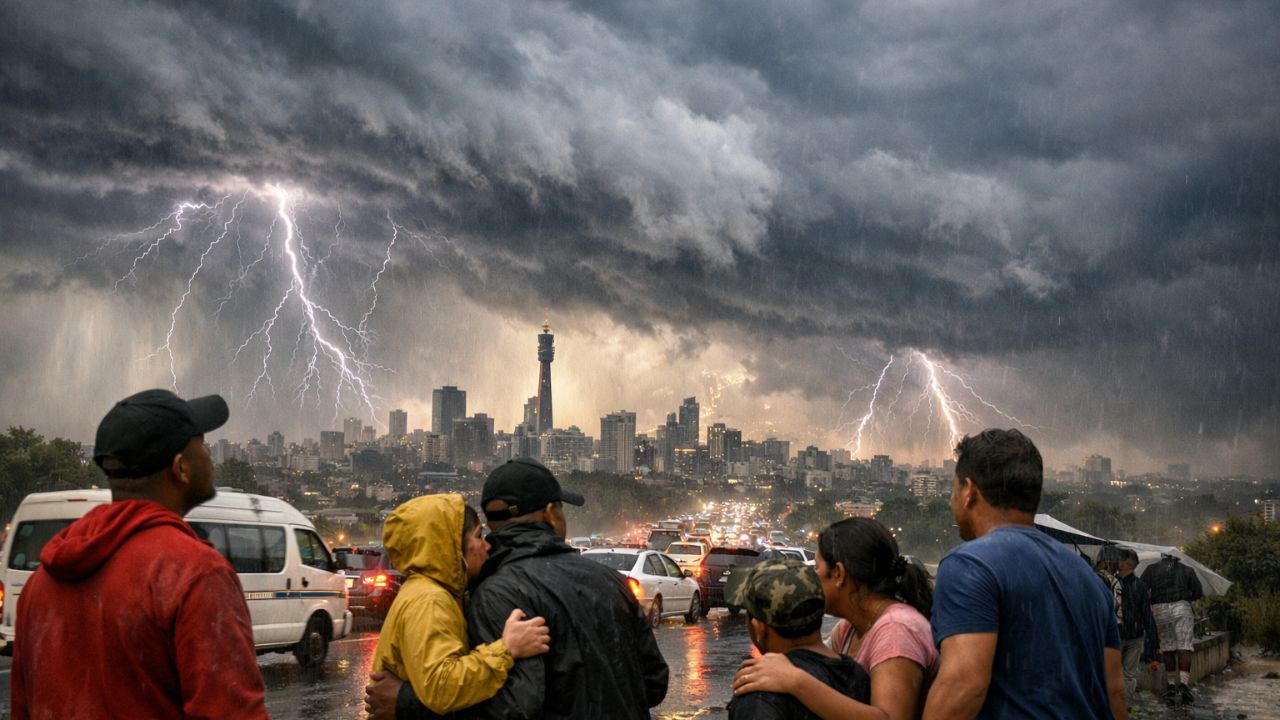
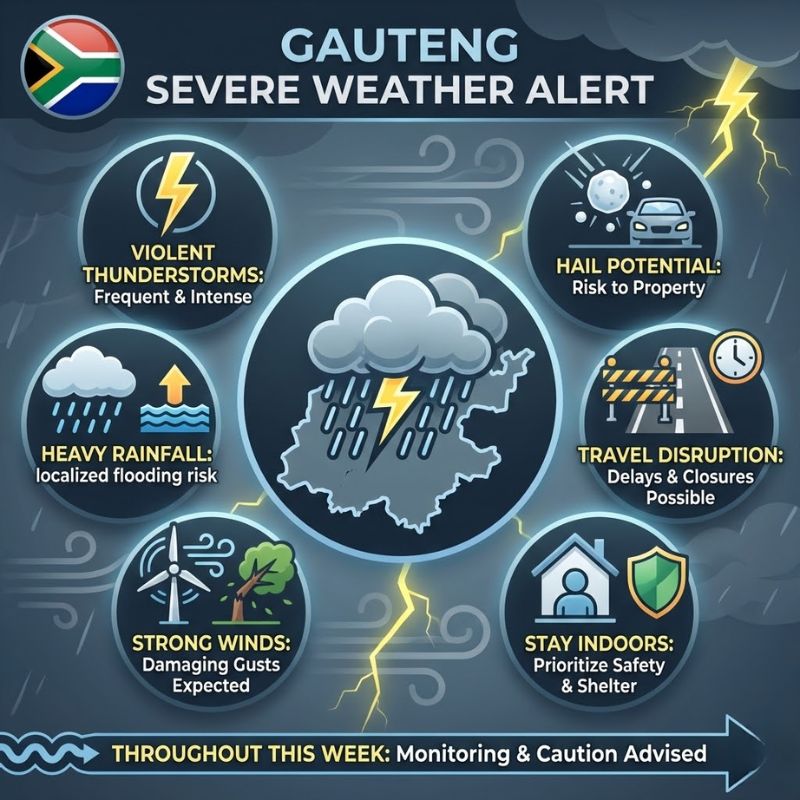
The outlook indicates the development of intense thunderstorms across affected areas. These systems are expected to produce short but heavy downpours that may result in localized flooding. In some locations, storms could also bring strong winds and hail, increasing the risk of damage to buildings and vehicles.

Preparedness Measures
Residents are advised to secure loose outdoor items and remain updated with weather alerts. Avoiding non-essential travel during peak storm periods is recommended to reduce risk.
Potential Disruptions and Hazards
Severe weather may lead to flooded roadways and disruptions to traffic flow and power supply. Areas located in low-lying zones and informal settlements face the greatest danger. Motorists should exercise extra caution when storms occur.

Safety Guidance for Communities
People in affected regions should tie down or store items that could be blown away by strong winds. It is safest to remain indoors during severe storms and to avoid driving when conditions worsen. During periods of frequent lightning, staying inside offers the best protection.
Effects on Daily Activities
Outdoor events, construction operations, and travel schedules may experience interruptions throughout the week. Schools, businesses, and commuters should prepare for possible delays caused by unfavorable weather conditions.