South Africa is getting ready for a difficult time ahead as Stage 6 load shedding starts on 26 January 2026. This means longer and more regular power cuts will affect many areas across the country. The national grid continues to struggle under pressure & officials have no choice but to cut electricity for longer periods every day. People at home and at work along with essential services are already changing their daily plans as the nation enters one of its hardest energy challenges this year. Knowing which areas lose power first & learning how the schedule operates will help people prepare properly and make daily life less difficult.

Stage 6 load shedding begins nationwide on 26 January
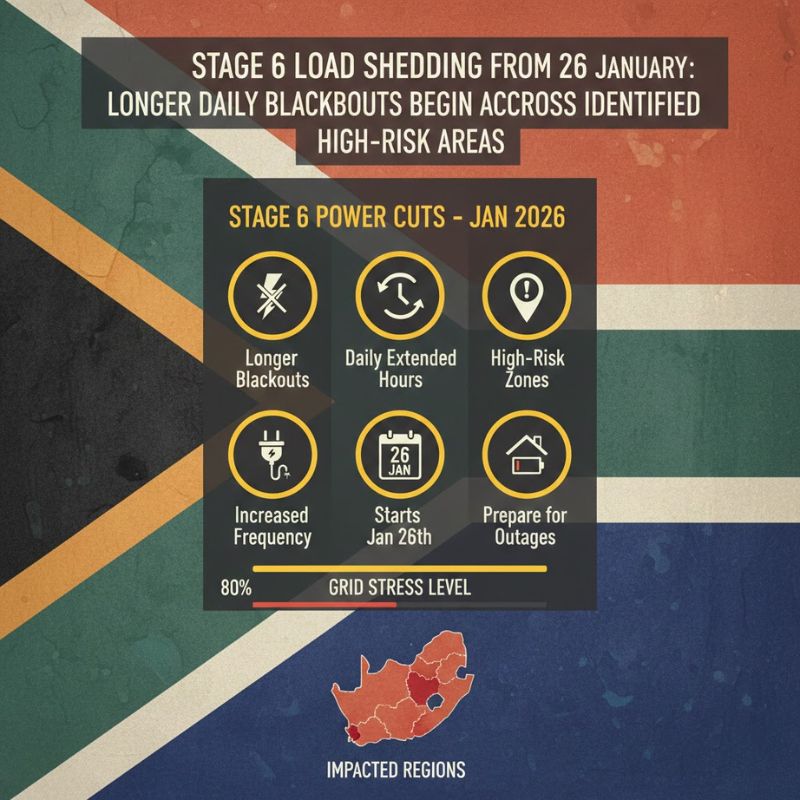
Starting 26 January 2026, the Stage 6 load shedding schedule will be implemented across the country, with some areas facing power cuts of up to 10 hours per day. Eskom’s focus during this phase is grid stability, which means rotations will be stricter and less flexible than in lower stages.
Residents should prepare for longer outage periods, tight rotation cycles, increased daily cuts, and shorter recovery gaps between blackouts. Urban centres and high-demand areas are often affected first to quickly reduce pressure on the system. For many households, daily routines such as working, cooking, and charging devices will need to align closely with published schedules.

Extended outages affect priority areas first
Under Stage 6, certain municipalities will experience extended blackouts earlier than others. These locations are typically selected based on electricity usage patterns and grid load sensitivity. Communities are advised to follow official updates for information on priority zones, early cutoff times, area-specific schedules, and local outage alerts.
Small businesses may find it especially difficult to operate during repeated shutdowns. Planning around off-peak supply windows and arranging backup power solutions can help reduce disruption during this demanding stage.
How Stage 6 changes everyday routines
Life under Stage 6 load shedding requires careful planning across South Africa. Households must schedule meals, remote work, and school activities around outages, while traffic systems and water pumping may also be affected.

Common challenges include longer nighttime outages, restricted appliance use, connectivity interruptions, and higher fuel costs for generators. Although essential services are protected where possible, residents are encouraged to use electricity carefully during supply periods to support grid recovery.
The wider implications of Stage 6 load shedding
The return of Stage 6 load shedding reflects broader energy pressures, including aging infrastructure and delayed capacity expansion. This phase highlights the importance of realistic planning and community cooperation as strain on the grid continues.
With economic impacts, household adjustments, and long-term energy solutions in focus, staying informed and prepared can help reduce uncertainty until supply conditions improve.
| Stage | Daily Outage Hours | Rotation Frequency | Primary Impact |
|---|---|---|---|
| Stage 4 | 6–8 hours | Moderate | Households |
| Stage 5 | 8–10 hours | High | Businesses |
| Stage 6 | 10+ hours | Very High | All sectors |
| Exempt Areas | Minimal | Low | Hospitals |